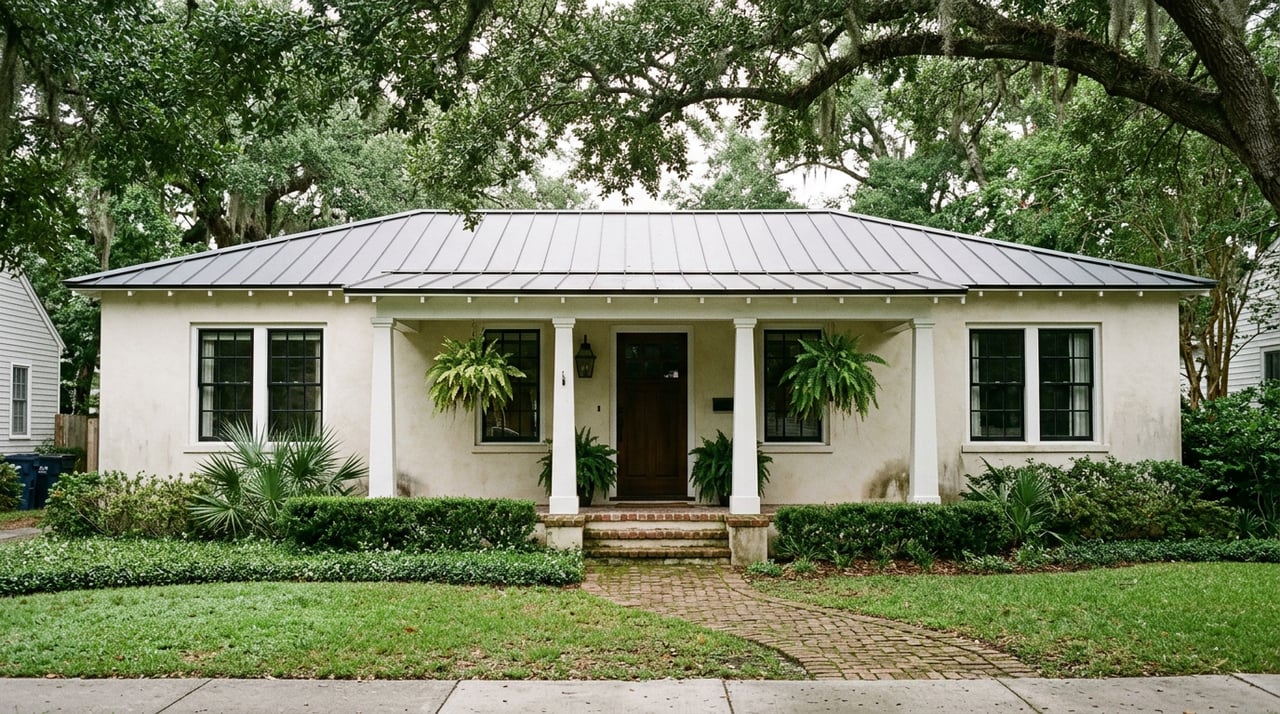
Stand at the southeast corner of Lake Eola Park on a Sunday morning and you can see both neighborhoods without turning your head. Thornton Park spreads east along Central Avenue, its restaurant patios already filling for brunch. Lake Eola Heights sits north, brick streets running under live oaks planted before either neighborhood had a name. Real estate listings for both use nearly identical language: historic, walkable, no HOA, minutes from the lake. A buyer comparing them on paper could be forgiven for thinking they're choosing between two versions of the same place.
They're not. And the clearest proof isn't the price tag. It's what each neighborhood's price tag is actually built from.
The Number That Moved Wasn't Real
In February 2026, Redfin reported that Lake Eola Heights home prices had jumped 118.5 percent year over year, to a median of $650,000. That's the kind of headline that gets forwarded around a neighborhood group chat. It's also, on inspection, close to meaningless.
Only seven homes sold in Lake Eola Heights that month, up from two the year before. A historic district with 487 total homes doesn't generate enough monthly transactions to produce a stable median. Two expensive renovations closing in the same 30-day window can swing the reported number by six figures without a single thing changing about what the neighborhood is actually worth.
Compare that to the Zillow Home Value Index for the same neighborhood, which measures typical value across the full housing stock rather than whichever handful of homes happened to close. As of July 2026, that figure sat at $477,330, up a modest 1 percent over the year. Homes.com's broader 12-month window, through March 2026, put the median at $662,500 with homes averaging 125 days on market, a slower and steadier picture than the Redfin headline suggests.
Here's the pattern worth remembering if you're watching either neighborhood: in a district this small, a single month of closings is a sample size, not a trend. The number that should move your decision-making is the one built from more transactions over more time, not the one that made a headline.
| Metric | Thornton Park | Lake Eola Heights |
|---|---|---|
| Reported median (12-mo window) | $680,000, down 7% YoY (Homes.com) | $662,500 (Homes.com, March 2026) |
| Typical value index | Not separately indexed | $477,330, up 1% YoY (Zillow ZHVI, July 2026) |
| Days on market | 84 (vs. 55 national avg) | 125 |
| Housing stock size | Larger, mixed condo and single-family | 487 total homes |
| Governance | No formal HOA in most of the district | No HOA, but Historic Preservation Board reviews exterior changes |
Orlando overall, for context, posted a median sale price of $416,000 over the three months ending July 2026, down 4.3 percent year over year. Both neighborhoods carry a real premium over the metro. The size of that premium, though, depends entirely on which number you're trusting.
What "No HOA" Actually Means North of the Lake
Lake Eola Heights markets its lack of a homeowners association as a selling point, and the absence of monthly dues is real. What that marketing tends to skip is that the neighborhood is a locally designated historic district, the first one Orlando ever created, back in 1989, with National Register of Historic Places status following in 1992. That designation means the City of Orlando's Historic Preservation Board has to approve exterior changes before an owner makes them.
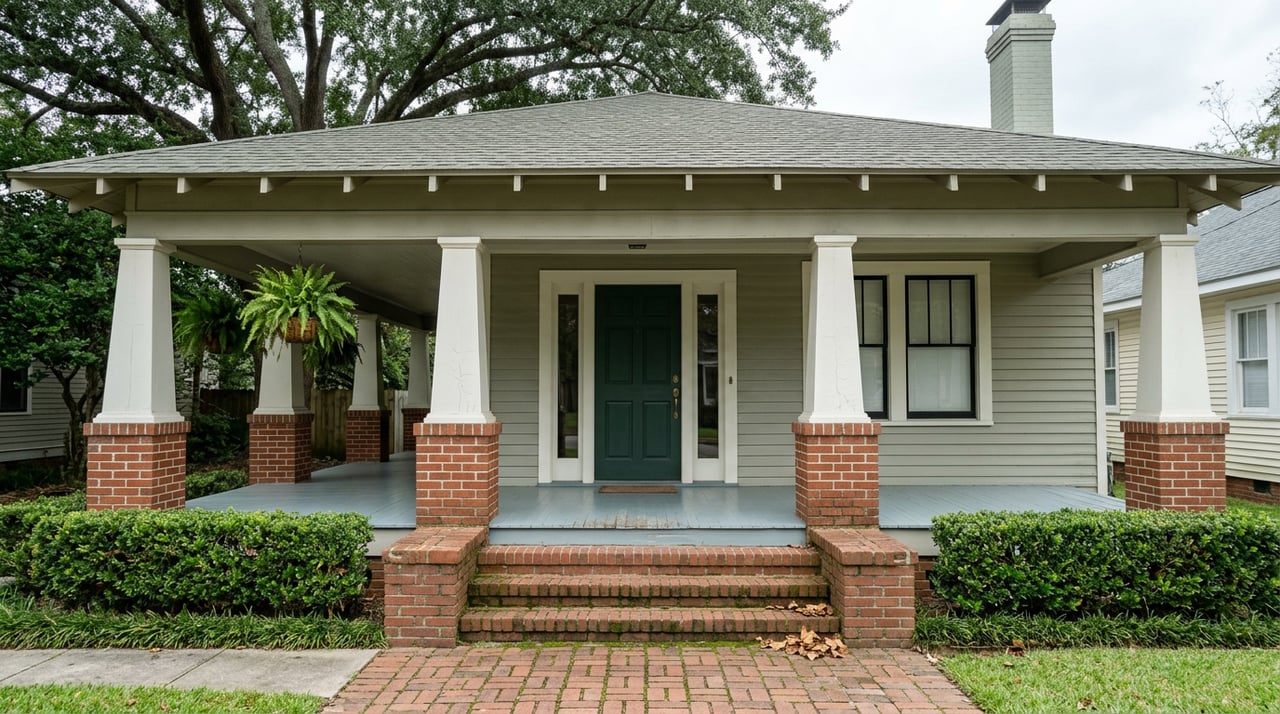
In practice, that's a different kind of governance than an HOA, not the absence of one. An HOA architectural committee answers to its own board and can be lobbied or outvoted by neighbors. A municipal preservation board answers to city code, and its review standards don't bend for a single homeowner's preference. If you're buying a 1905 to 1925 craftsman bungalow here expecting the freedom that "no HOA" implies, the freedom applies to your paint color choices and your landscaping, not to your roofline, your window replacements, or your front porch.
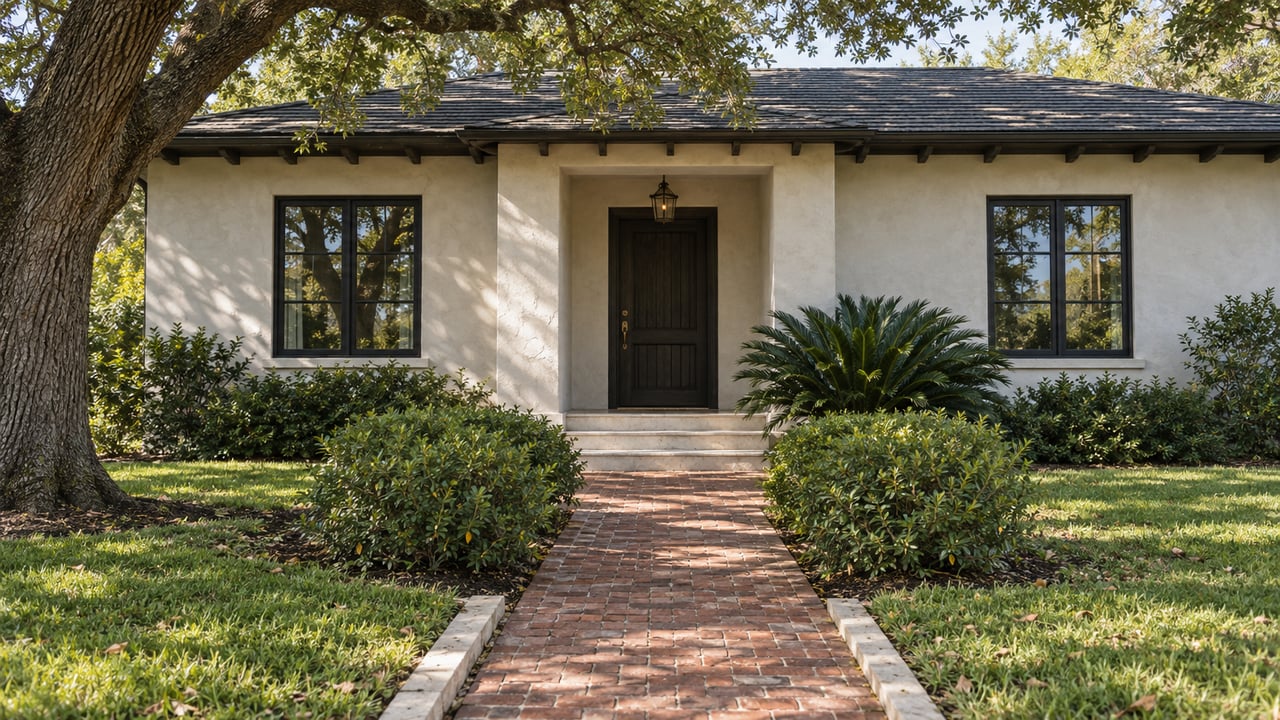
The upside is what that same oversight protects. Lake Eola Heights still has its original brick streets, its live oak canopy, and a consistent architectural character that traces back to why the neighborhood exists at all. The land was part of roughly 200 acres accumulated by Jacob Summerlin, Orlando's first city council president, for a citrus operation. The Great Freeze of 1894 to 1895 wiped out the citrus, and Summerlin's heirs subdivided the land for housing just as the Florida Land Boom brought a wave of New England transplants seeking mild winters. Their builders adapted northern architectural vernacular to Florida heat with deep porches and cross-ventilating window placement, which is why the bungalow and colonial revival housing stock here still reads as distinctly regional rather than generic historic.
The zoned elementary school, Hillcrest, carries a strong reputation locally, and Eola General, a market and gathering spot inside the district, functions as the kind of everyday anchor that gives the neighborhood a center beyond its architecture. New construction is not entirely absent either. A David Weekley Homes townhome development recently added modern three-bedroom product inside the historic boundary, proof that the preservation rules constrain exterior character without freezing the neighborhood's growth entirely.
The Occupancy Question Nobody Asks in Thornton Park
Thornton Park's pitch is different and, in its own way, more straightforward. This is Orlando's most urban residential neighborhood, sitting on the east shore of Lake Eola with a restaurant and bar scene concentrated on Central Avenue, Washington Street, and Summerlin Avenue. The neighborhood's western edge effectively is Lake Eola Park, home to a weekly Sunday farmers market drawing more than 150 vendors, an amphitheater that hosts Orlando Shakes performances, and the pedal swan boats that have become a small piece of local identity.
That lake adjacency is exactly why Thornton Park carries a premium over nearby College Park and SoDo. It's also why a buyer here is paying for proximity and energy more than for architectural protection. Most of Thornton Park has no HOA either, but it also has no historic preservation layer governing renovations, which means the housing stock is a genuine mix: 1920s bungalows sitting next to new-build condo product like Vilasa Thornton Park, a project with interiors designed by Carla Acosta Interiors and open loft-style layouts that would look out of place a few blocks north.
What doesn't get mentioned as often is who actually lives in these homes once they sell. A neighborhood profile of Thornton Park's housing puts renter occupancy at 56.2 percent, against 43.8 percent owner-occupied. For a buyer picturing the kind of stable, owner-occupied block that supports long-term relationships and steady reinvestment in the housing stock, that's worth sitting with. A majority-renter neighborhood isn't a red flag on its own. Plenty of excellent urban neighborhoods lean toward renters, and it doesn't stop values from holding. But it does mean the block you move onto may turn over tenants more often than it turns over owners, and the character of daily life there will reflect that.
The question worth asking before you write an offer isn't which neighborhood is better. It's which trade you're actually making, and whether you knew you were making it.
Reading the Price Tag Correctly
Put side by side, the two neighborhoods are answering different questions. Lake Eola Heights asks a buyer to trade renovation flexibility for architectural permanence, protected by a board that isn't going anywhere. Thornton Park asks a buyer to trade a stable owner base for walkable lake access and a restaurant scene most Orlando neighborhoods can't replicate. Neither trade is wrong. Both are frequently mispriced by buyers who read "historic" or "no HOA" as a single, interchangeable signal instead of two very different governance realities.
If you're comparing these neighborhoods as part of a broader Central Florida search, the same discipline applies wherever you're looking, whether that's a Winter Park submarket with its own architectural review process or a Maitland lakefront lot without one. Small housing stock and thin monthly transaction counts produce headline swings that don't reflect ownership reality. The number to trust is the one built from more sales over more time, and the governance question to ask isn't whether there's an HOA. It's who actually has to approve what you want to do with the house once you own it.
Frequently Asked Questions
Does "no HOA" in Lake Eola Heights mean I can renovate freely? No. The absence of a homeowners association does not remove the requirement to secure Historic Preservation Board approval for exterior changes within the district boundary, since the neighborhood has been locally designated since 1989.
Is Thornton Park's renter-majority status a reason to avoid buying there? Not necessarily. It's a factor to weigh against your own goals. A buyer looking for immediate rental income or long-term appreciation in a walkable, restaurant-dense corridor may see the renter majority as evidence of steady tenant demand rather than a drawback.
Which neighborhood holds value more predictably? Neither headline median tells the full story on its own. Lake Eola Heights' typical value index has moved gently, while its month-to-month reported medians can swing sharply due to low sales volume. Thornton Park's larger and more liquid market produces steadier, if still declining, 12-month figures as of mid-2026.
Comparing neighborhoods like these two is exactly the kind of decision where local context changes the math. If you're weighing a move into downtown Orlando's historic core, or trying to understand how a specific block's governance and occupancy patterns affect your long-term plans, Drew Henner is glad to walk through what the numbers actually mean for your search. Let's Connect.