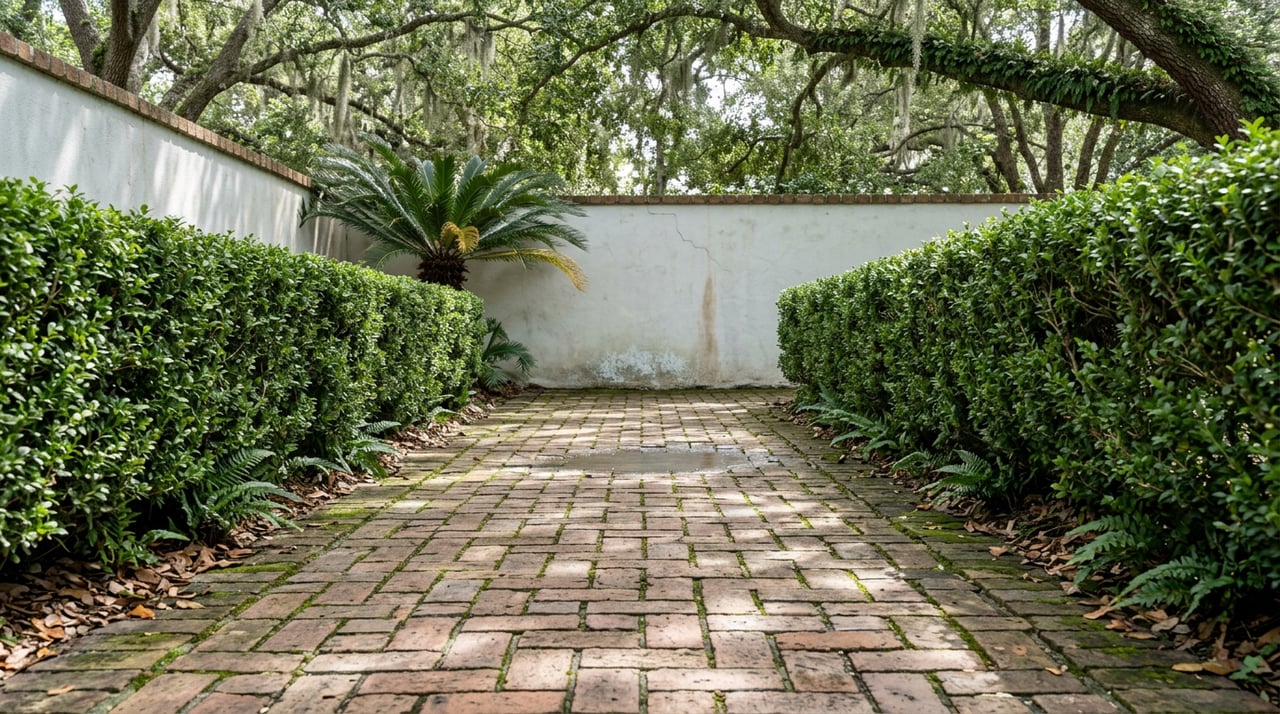
Five years ago, biking from a house near Delaney Park to Greenwood Urban Wetlands meant sharing Anderson Street with rush-hour traffic funneling toward the 408. Most residents didn't bother. The wetlands sat less than a mile away, visible on a map, functionally out of reach on a bike with kids in tow. Today that same stretch runs under live oak canopy on a separated path, and Saturday morning in Delaney Park now includes people who never used to leave the seven and a quarter acres of the park itself.
That's the actual change worth understanding here. Not a new restaurant, not a rezoning. A road that Delaney Park residents used to avoid has become the thing that connects the neighborhood's separate pieces into one loop you can do without a car.
What Actually Got Built
The Downtown Connector Trail runs 1.6 miles along the south side of Anderson Street, from Summerlin Avenue to Lake Underhill Road, according to the contractor's project page, which also notes the project was completed on schedule with minimal disruption to the neighbors along the corridor. That's a specific, engineered stretch, not a repainted bike lane. Wide asphalt, separated from car traffic, shaded for most of its length by mature live oaks that the city planted or preserved during construction.
It's one segment of a larger 8.5-mile loop the city has been building around downtown Orlando for years, piece by piece, connecting to trails like the Orlando Urban Trail and the Cady Way Trail. The Anderson Street segment is the piece that touches Delaney Park directly, and as of last year's local reporting, it's finished and open. Orlando Weekly's neighborhood guide to SoDo and Delaney Park confirmed the completion directly, calling the corridor "an excellent spot for biking" now that the work is done.
What that means in practice: the walk or ride from Delaney Park to the wetlands, which used to require riding shoulder to shoulder with cars on a road running parallel to an expressway, now happens on a dedicated path shaded well enough that August mornings are tolerable.
The Two Landmarks It Finally Connects
Greenwood Urban Wetlands sits at 1411 Greenwood Street, a small park built as a working stormwater treatment system with a boardwalk threading across bridges through native wetland plantings. It has been there for years. What changed is how many people from Delaney Park actually walk it on a given weekend, now that getting there doesn't mean crossing four lanes of traffic first.
Keep heading east along the trail and you pass Greenwood Cemetery, established in 1880 and still one of the oldest burial grounds in the city. Several of Orlando's founding families are buried there, along with veterans sections dating back to the Civil War. It's not a stop most people plan a special trip for. It's the kind of thing you notice because you're already riding past it on the way somewhere else, which is a different relationship to a piece of history than driving there deliberately.
The trail ends at Lake Underhill Road, connecting into the Lake Underhill Path and giving Delaney Park residents a car-free route out to that side of town for the first time.
Here's what that shift looks like laid out plainly:
| Errand | Before the trail | After the trail |
|---|---|---|
| Walk to Greenwood Urban Wetlands | Shoulder riding along Anderson St. traffic | Shaded, separated path the whole way |
| Ride to Lake Underhill | Not realistic on a bike with kids | Connected path, no car needed |
| Saturday loop (park, wetlands, food stop) | Three separate car trips | One continuous walk or ride |
Delaney Park Is Still the Anchor
None of this replaces what Delaney Park already was. The park, 7.25 oak-shaded acres known as Duckworth Park until a 1959 renaming, remains the gathering point the loop starts and ends at. On any given day residents are out running the perimeter, playing softball or tennis on the fields, or watching kids work through the playground equipment under the tree cover.
One longtime resident, a dog owner who works downtown, described to Orlando Magazine why the neighborhood suits him: it's quiet, yet close enough to downtown to walk, bike, or take transit to work. A local painter who takes her easel to the park on weekends put it differently, telling the same publication, "We've discovered there are some very talented people living in the area." Neither comment reads like marketing copy, because it isn't. It's just what people who already live there say when asked what they actually do on a Saturday.
That's worth sitting with. The park was never the problem. The problem was everything adjacent to it that required a car to reach. The trail didn't add new reasons to be outside. It removed the friction that kept people from using the reasons that were already there.
Where the Loop Actually Ends
A loop needs a destination, and Delaney Park has two that predate the trail but now function as its natural endpoints.
903 Mills Market, at 903 South Mills Avenue, has been the neighborhood's outdoor-seating deli since 2003, run by Nicola and Miriam Pastore since 2010. It's dog-friendly enough that Tripadvisor reviewers specifically call it out as the most dog-friendly restaurant near downtown, which matters if your Saturday started with a dog on a leash at Delaney Park. The Monte Cristo and the Grateful Bread, a turkey, blue cheese, and cranberry mayo sandwich on sourdough, are the two orders regulars mention most.
For a longer sit, Delaney's Tavern at 1315 South Orange Avenue runs an all-you-can-eat weekend brunch Saturday and Sunday from 10:30 a.m. to 2:30 p.m., with last seating at 1:30. As of a spring 2026 write-up, pricing runs $49 per adult and $20 for kids, with bottomless mimosas available for an additional $20. The spread includes crab legs, a brisket carving station, chicken and waffles, and made-to-order pasta and omelette stations, the kind of brunch that turns a bike ride into a two-hour stop.
SoDo's family-owned neighborhood brewery rounds out the options for anyone who wants to close the loop with a beer instead, a taproom built around small-batch releases rather than trying to be a destination bar for anyone outside the neighborhood.
The Actual Shift
None of these places are new. Delaney Park has run softball games for decades. 903 Mills Market has been serving sandwiches since 2003. Greenwood Urban Wetlands has had its boardwalk for years. What's new is that a resident can now string all of it together on foot or by bike in a single morning, something that wasn't practical when the only way between them was a stretch of Anderson Street nobody wanted to ride.
That's the kind of change that doesn't show up in a listing description or a walkability score. It shows up in how many strollers you see on the trail on a Saturday, and in how far from home people are willing to let their kids ride a bike now that there's a path instead of a shoulder.
If you're already living the Delaney Park loop, none of this is news. If you're curious what else in Central Florida works this way, quietly connected pieces that only reveal themselves once you've lived somewhere a while, Drew Henner is a good conversation to have. Let's connect.