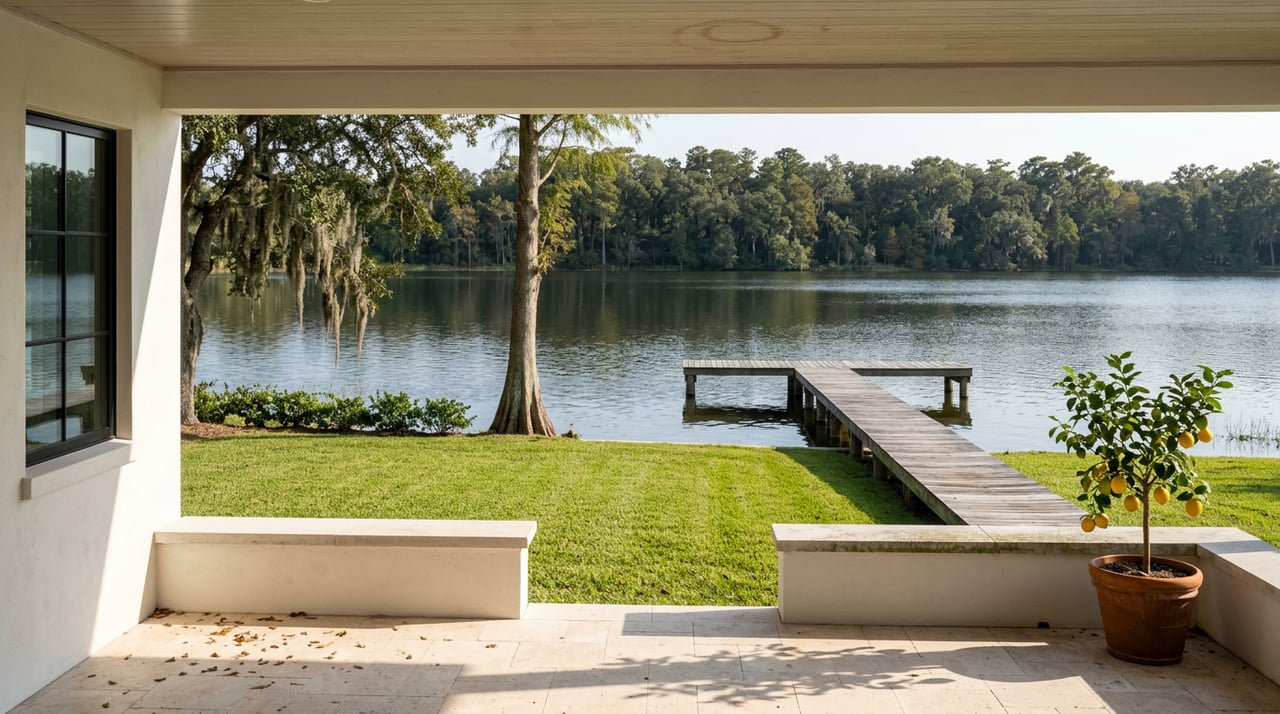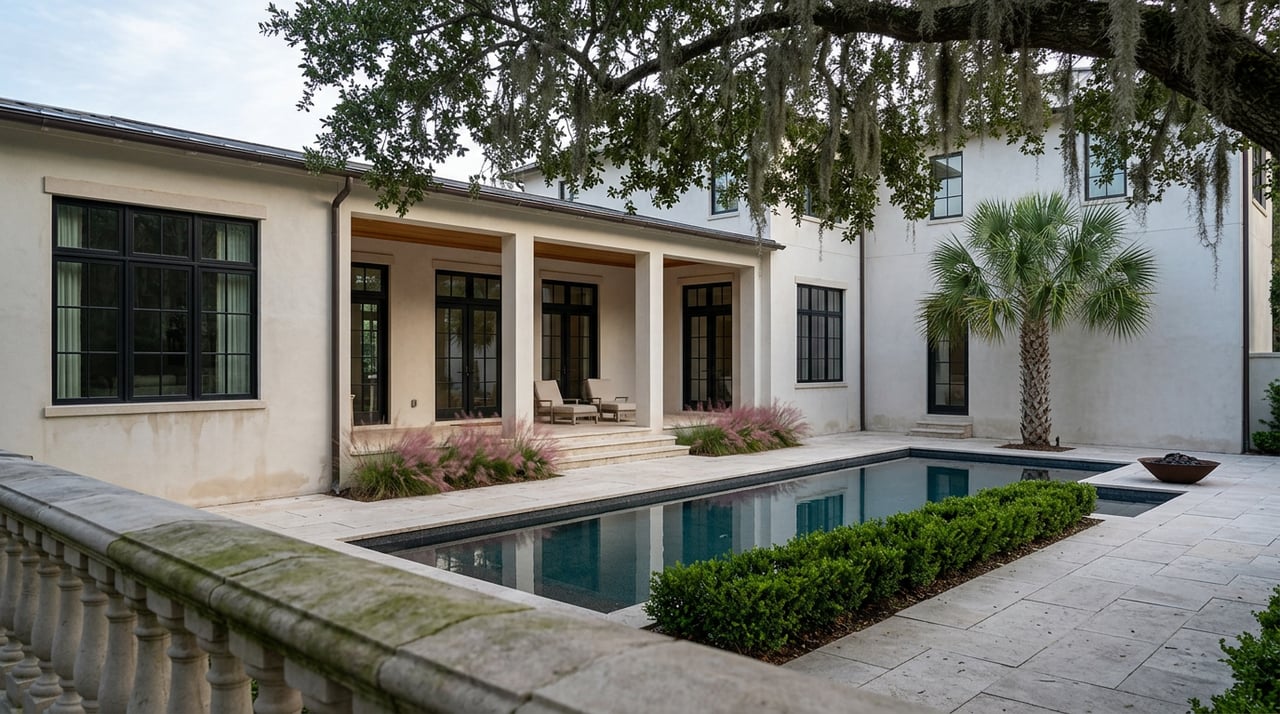
The pond in front of the new owl enclosures at the Audubon Center for Birds of Prey was still holding its first water when the Valentine's weekend crowds came through in February. Fresh signage. New viewing angles. Two Barred Owls named Fil and Hitch settling into a redesigned home. If you stopped by that weekend on Audubon Way, you saw exactly what the ribbon-cutting was built to show you.
What you didn't see, because it doesn't look like anything, was a small antenna array quietly listening for a radio signal from a bird that had never once landed at the center. That signal arrived on April 3. It belonged to a kestrel from Massachusetts, and it told researchers something about Maitland that six months of construction never could: this three-acre lakefront property on Lake Sybelia is now a waypoint on a map that stretches from New England to the Florida Keys.
What Actually Got Rebuilt
The short version, for anyone who hasn't been back since the closure: the center shut its doors to the public in July 2025 so crews could tear down and replace the original 1979 owl aviary, an octagonal wood structure with eight wedge-shaped enclosures that back-to-back hurricanes had damaged beyond repair the previous fall. The replacement is called the Sitek Smith Owl Aviary, designed by the landscape architecture firm Coyle & Caron, whose other clients include the Smithsonian National Zoo, Bok Tower Gardens, and Zoo New England. Center director Katie Gill Warner said the firm's experience was central to getting the redesign right for the birds, the staff, and the visitors who come through.
The new aviary now houses:
- Fil and Hitch, two Barred Owls
- Henry, Charley, and Jeanne, three Great Horned Owls
- A resident Black Vulture
Each enclosure has ponds built in to keep the birds cool through Central Florida summers, along with covered viewing areas for guests and updated signage throughout. The center opened it to the public over Valentine's Day weekend, February 14 and 15, with Raptor Chats and a full weekend of programming to mark the return.
That is the story most people in Maitland already caught, whether from the chamber's event calendar or a Spectrum News segment that covered the center's rescue work that spring. It's a good story. It just isn't the one that matters most if you live near Lake Sybelia.
The Part the Ribbon-Cutting Didn't Cover
Sometime during the same renovation window, the center added a Motus station, a small receiving tower that's part of an international tracking network run by Birds Canada in partnership with Audubon. Researchers around the world tag birds, bats, and even insects with tiny radio transmitters, and any station within range picks up a "ping" whenever a tagged animal passes by. Florida already has roughly three dozen of these stations, including one at Audubon's Corkscrew Swamp Sanctuary near Naples. Maitland's version can detect a tagged animal within about seven miles.
For weeks after the tower went live, nothing happened. Then, on April 3, an American Kestrel, the smallest falcon species in North America, flew within range and triggered the first ping.
That single detection turned out to carry a full biography. The kestrel, an adult male, had been tagged back in July 2024 as part of a research project called American Kestrel Massachusetts, run by the Massachusetts Division of Fisheries and Wildlife and Mass Audubon. Motus data already showed this bird making the same run every year, migrating the length of the East Coast between Massachusetts and Florida. In both the 2024-25 and 2025-26 migration cycles, his southernmost recorded stop was Hobe Sound National Wildlife Refuge in Martin County, on Florida's southeastern coast. His last confirmed movement there was October 11, 2025.
After that, silence. Motus towers exist as far south as the Florida Keys, Cuba, the Cayman Islands, and Mexico, and not one of them picked up his tag for six months. Nobody could say where he spent the winter. Then Maitland's new station caught him heading north again in early April, marking the start of his spring migration back up the coast. As of the center's own report a few weeks later, no other station had picked him up since, so the last confirmed word on this particular bird still traces back to that one ping on Audubon Way.
That's the gap the new tower closed, even if only partly. A kestrel that has been flying past or near Central Florida for at least three migration cycles finally had one of his movements tied to a specific place, and that place is a lakefront property most Maitland residents drive past without a second thought.
A Return to Where This Started
There's a detail in the center's own history that makes this feel less like a coincidence and more like a continuation. The first Florida Audubon Society meeting was held in Maitland back in March 1900, convened to save the state's wading birds from the plume trade that was decimating egret and heron populations at the time. The Center for Birds of Prey grew out of that same lineage, tucked along Lake Sybelia between the City of Maitland and the Town of Eatonville ever since.
For more than a century, that mission mostly meant hands-on rescue and rehabilitation happening in one fixed spot. Now it also means a radio tower quietly logging birds that never touch down, expanding what "protecting Florida's raptors" can mean from a single property to a signal in a hemisphere-wide network. The owls got a new house. The mission got a new sense.
The Everyday Work Never Paused
None of this replaced the center's core, day-to-day rescue work, which continued through the closure and continues now. Raptor specialist Beth Lott and raptor conservation manager Samantha Little still handle the birds that arrive daily, many with injuries from cars, power lines, or falls from the nest. Bald eagles account for roughly 80 arrivals a year, mostly young birds that tumble out before they've learned to fly and need fluids, tagging, and a temporary habitat to rebuild strength before release. Some birds, like the aviary's Great Horned Owls and Black Vulture, never fully recover flight and stay on as permanent residents, doing the quieter work of letting visitors get close enough to actually care.
That's the version of the center longtime volunteers describe when they talk about first-time guests, the ones who say they've never stood this close to an owl or a falcon before. The new aviary just gives that experience a better vantage point than the old one ever could.
Worth the Drive Down Audubon Way
The center is open Tuesday through Sunday, 10 a.m. to 4 p.m., closed Mondays. If you haven't been back since before the closure, the aviary alone is worth the stop, and if you time it right you might catch a Raptor Chat with one of the resident birds. But the bigger reason to pay attention going forward has nothing to do with what's visible from the boardwalk. Somewhere between now and next spring, that small tower will likely catch another signal, another bird whose winter location has been a mystery until it happens to fly within seven miles of Lake Sybelia. Maitland just became one of the places that gets to know first.
If you're already thinking about what else has changed in Maitland lately, or you're weighing a move into a neighborhood with this kind of civic and natural texture built in, Drew Henner knows this part of Central Florida from the inside. Let's Connect.